Exoskeletons in industry: how European companies can reduce workplace injuries
Every year, thousands of European workers suffer from back injuries, joint pain, and fatigue caused by repetitive lifting and long shifts in warehouses, factories, and logistics hubs. The impact is not only personal, it costs companies millions in lost productivity, compensation, and turnover.
Now, a new solution is emerging: industrial exoskeletons.
What Are Industrial Exoskeletons?
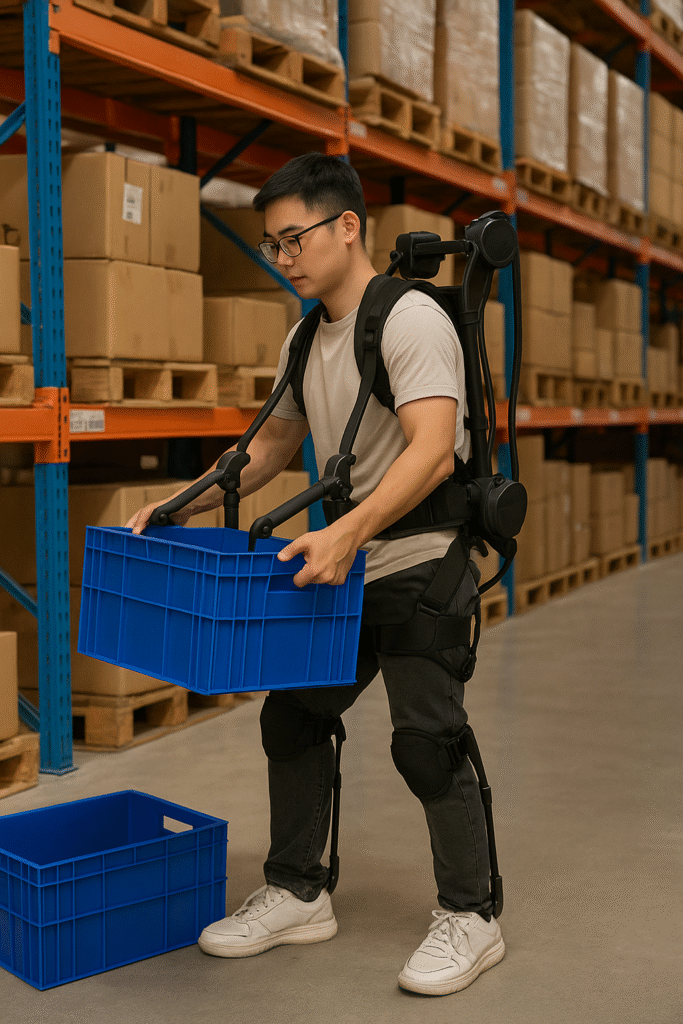
Industrial exoskeletons are wearable robotic systems that support the body during physically demanding tasks. By redistributing weight and providing torque assistance, they reduce strain on muscles and joints.
Unlike traditional protective equipment, exoskeletons are proactive: they don’t just protect against accidents, they actively prevent fatigue and injuries by sharing the workload.
Benefits for Employers & Workers
- Reduced injuries: Lower risk of musculoskeletal disorders (MSDs).
- Higher productivity: Workers sustain performance throughout long shifts.
- Lower turnover: Less burnout, better morale, improved retention.
- Safety compliance: Supports EU workplace safety initiatives.
- Positive image: Shows commitment to employee wellbeing and innovation.
Case Applications
- Logistics & Warehousing → reduce back strain from constant lifting and bending.
- Manufacturing & Assembly → support repetitive tasks requiring sustained posture.
- Construction → assist with carrying tools and materials safely.
- Agriculture & Ports → reduce fatigue in long outdoor shifts.
With models like the Kenqing Q20 (the world’s lightest waist-assist exoskeleton, only 2.7 kg) and the A10 (offering 30 kg support capacity), European companies can find solutions for different work environments.
ROI: Safety Meets Profitability
Investing in exoskeletons isn’t just about avoiding injury, it’s about boosting efficiency. A workforce that experiences less fatigue can handle more tasks, with fewer errors and absences.
For employers, that means:
- Lower insurance costs
- Fewer sick days
- Higher output per worker
The return on investment can be visible within months, not years.
A Responsible Adoption
It’s important to highlight that exoskeletons are not replacements for workers, but tools to support them. Training and proper use are essential to ensure both safety and efficiency.
The Future of Safer Work
Exoskeletons are no longer experimental, they are practical, field-tested solutions already being deployed in Europe and Asia.
At Eazy Walking, we bring the leading Kenqing exoskeleton range directly to European companies (except Germany, UK, and France). Whether you manage a warehouse, a port, or a manufacturing plant, we can help you evaluate, pilot, and implement the right exoskeleton program for your workforce.